
✨ Save 50% on Annual Plans ✨ Claim 6 months FREE →
All the best AI models in one place
Nano Banana, GPT Image, Flux, Seedream, Seedance and more. Try it now for free!

2 years ago
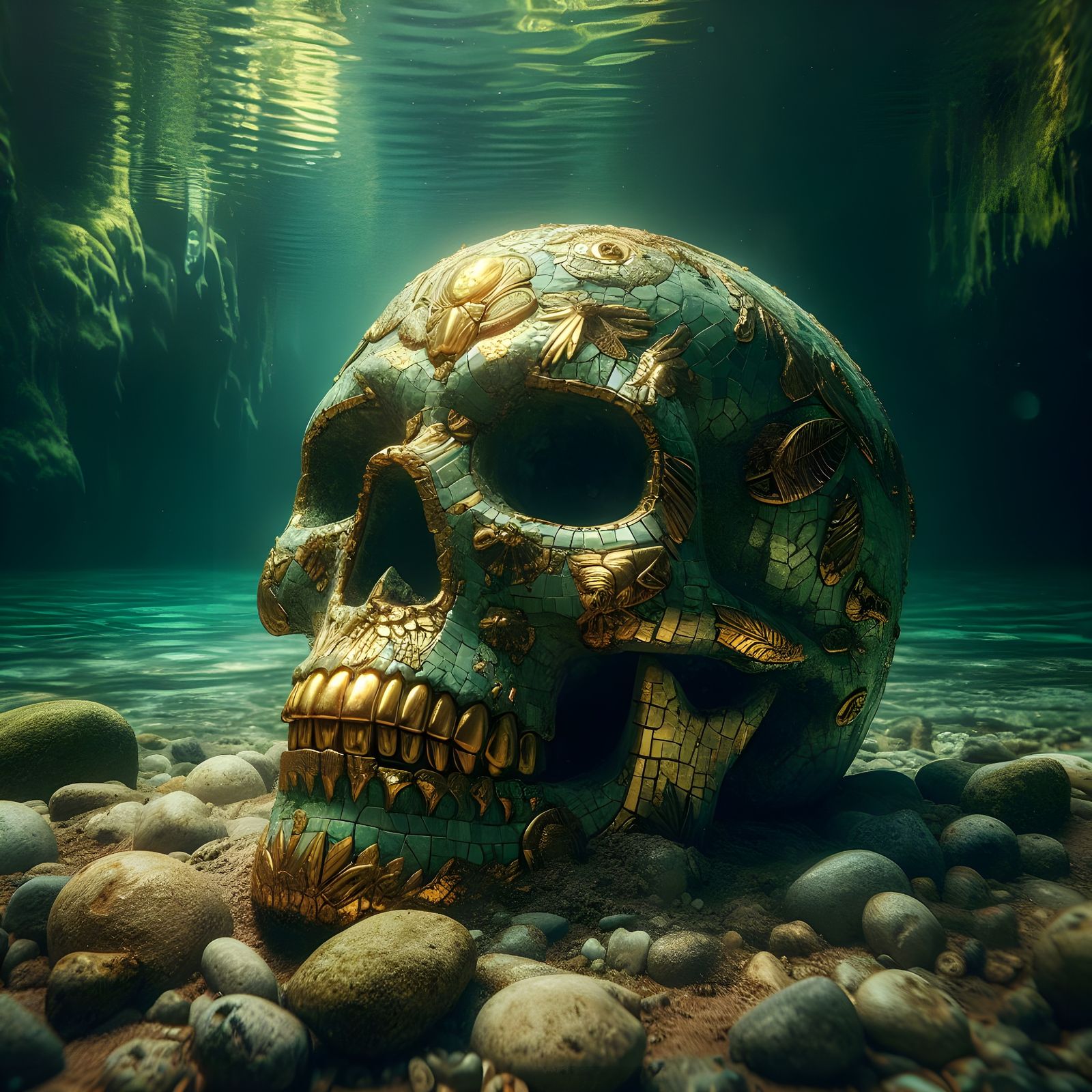
The Jade Skull Offering
Created 2 years ago · 35 comments· 0 likes
Uploaded
Tsin is selling this creation
In the drought-stricken jungles of the Yucatan in 1500, desperate Maya priests commissioned an extravagant offering to appease Chaac, the rain god - a human skull completely covered in thousands of jade mosaic tiles and gold.
After months of painstaking work by skilled artisans, the vivid green skull seemed almost supernaturally alive. On an appointed day, the high priests carried out an sacred ceremony, casting the priceless jade skull into the waters of the legendary cenote at Chichen Itza.
Only days later, the rains finally arrived, quenching the parched lands. The people rejoiced, giving thanks for Chaac receiving their wondrous offering. And in the depths of the cenote, the jade skull remains as a potent relic of the Maya's profound reverence for their gods, still shimmering over 500 years later.
35 Comments
Join the conversation


Azd_SAM @AzdSAM
Wonderful!👍❤❤❤➖➖➖AzdSAM⤵️
2026-06-01T03:59:43.260ZReply

What a magnificent creation!! Incredible work! Thank you so much for playing my 𝘔𝘖𝘚𝘛 Popular Creation! Challenge! 😁✨
Results:
The next challenge is starting shortly. Hope to see you there! ~𝑪×𝑲




Challenge Group Message
Thanks for taking part in my recurring ⭕NO THEME⭕ challenge. So many awesome entries including yours! 🤩
Congrats to those in the Top 3! 👏🏻
Another challenge will start soon in the same room, hope to see your creativity again! 👍🏻
Challenge results:
My Other Challenge Room:


Creation Settings
This creation was not made on NightCafe.
- Model
bing creation
- Prompts
Tsin has hidden the prompt
- Workflow
Not provided


