
✨ Save 50% on Annual Plans ✨ Claim 6 months FREE →
Create your own skull images with AI
Design unique skull graphics and artwork for free. Unleash your creativity with our easy-to-use AI image generator.

a year ago
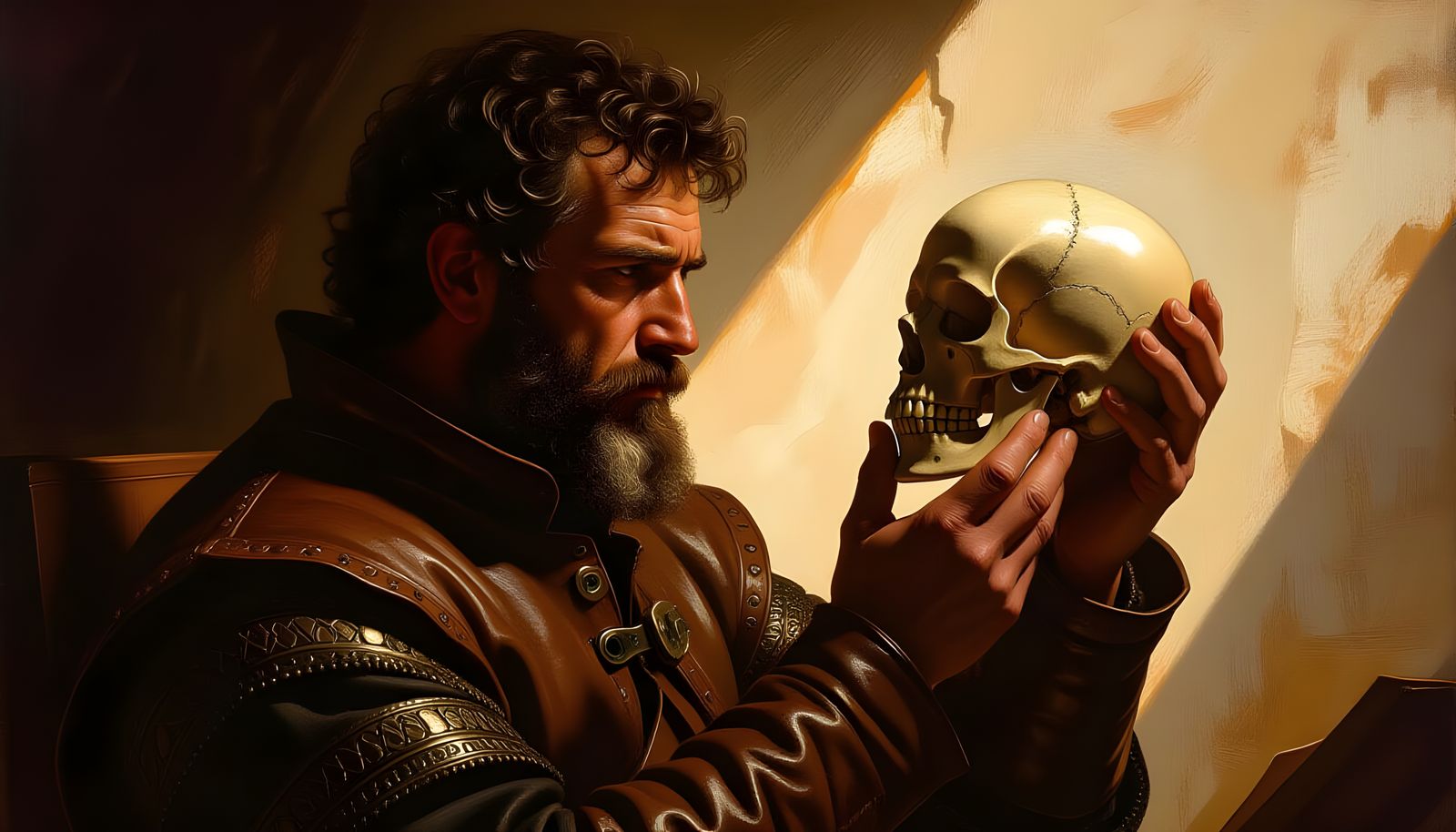
"Alas, poor Yorick! I knew him, Horatio: a fellow of infinite jest, of most excellent fancy" ~ William Shakespeare
Created a year ago · 14 comments· 0 likes
HiDream I1 Fast4x
*"Alas, poor Yorick! I knew him, Horatio: a fellow of infinite jest, of most excellent fancy" ~ William Shakespeare (Hamlet, Act 5, Scene 1).
The line is spoken by Hamlet, in a graveyard scene where he encounters the skull of Yorick, the court jester he knew as a child. Hamlet reflects on the inevitability of death and the memories associated with Yorick, who once brought joy and laughter to his life; he considers Yorick's playful nature and the stark contrast between his past and the present reality of death.
Hamlet contemplates life, death, and the human condition. The scene serves as a reminder that all people, regardless of their status or wealth, will ultimately share the same final fate - death. The imagery of Yorick's skull symbolizes the physical decay that comes with death, contrasting sharply with the vibrant life Yorick once had. Hamlet's reflection on Yorick's past joviality highlights the theme of lost innocence and the transient nature of joy.

Creation Summary by Vincent
Man Inspecting Skull in Dramatic Chiaroscuro Lighting
This image shows a highly detailed oil painting of a man holding a skull. The scene is lit with dramatic chiaroscuro, reminiscent of old master portraiture and texture.
Created by Aussie on Oct 3, 2025 using the HiDream I1 Fast AI image generator model.
Progress Images
14 Comments
Join the conversation


Fuzzy Boots @FuzzyBoots
nice realism
2025-10-05T17:57:29.065ZReply


Creation Settings
- Text Prompts
- Close up of a man (wearing Medieval shirt and jacket) holding up a skull to inspect it. Medieval era.Weight: 1
- Model
 CKPT
CKPT- Initial Resolution
Medium
- Aspect Ratio
16:9
- Overall Prompt Weight
50%


