
Create Ancient Egyptian Portraits with AI
Instantly generate your own Ramses II style portraits with our free AI image generator. No design skills needed!

3 years ago
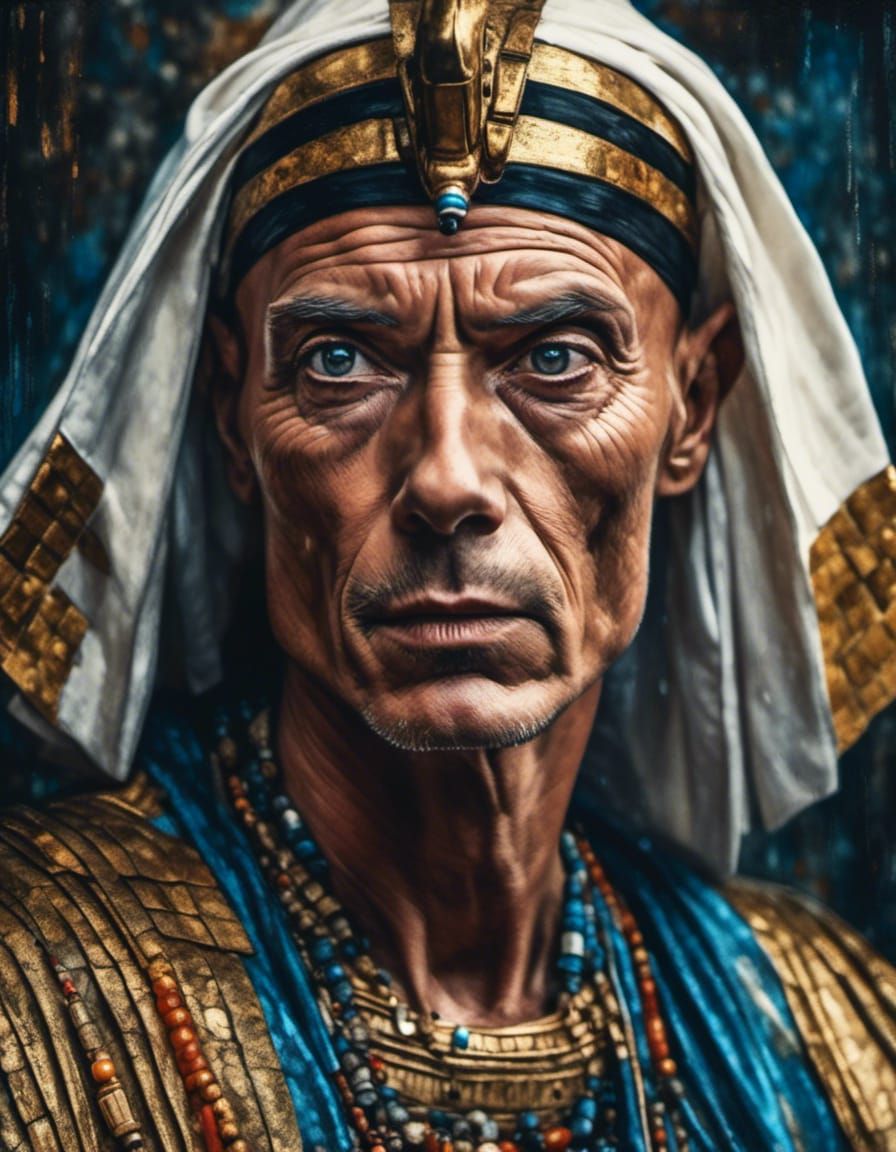
Ramses II
Created 3 years ago · 8 comments· 0 likes
Hikari Realism
Well before his death, Seti I appointed his son Ramses II, sometimes called Ramses the Great, as crown prince.
During the long reign of Ramses II (1279–13 bce), there was a prodigious amount of building, ranging from religious edifices throughout Egypt and Nubia to a new cosmopolitan capital, Pi Ramesse, in the eastern delta; his cartouches were carved ubiquitously, often on earlier monuments.
Ramses II’s penchant for decorating vast temple walls with battle scenes gives the impression of a mighty warrior king.
The king had an immense family by his numerous wives, among whom he especially honoured Nefertari. He dedicated a temple to her at Abū Simbel, in Nubia, and built a magnificent tomb for her in the Valley of the Queens.
8 Comments
Join the conversation


MagisterLudorum @MagisterLudorum
Thank you so much for participating in the Ancient Egypt challenge. A great collection of beautiful art. I hope that everyone enjoyed seeing them all as much as I did.
Here’s the link for the challenge so you can look over all the wonderful creations, like and comment on those you feel deserve it.
The next challenge in the World Civilization Room is The Golden Age of Piracy which has already started.
See the challenge for details.
☑️ Please pay special attention to the criteria for voting and ask yourself if you can commit to the challenge rules before entering.
I hope to see you there. Pax Vobiscum et Vestris.
2025-03-19T02:03:12.272ZReply

Hi thank you for joining in the male portraits challenge!😘Fantastic work from everybody this time and three cheers for the winners 🏆 I will be sending out personal congratulation messages to all of the most highly voted so please look out for that if it's you !!
once again thanks for joining and bye for now, 🤗 NO REPLIES REQUIRED, Thanks!

Love the character in this portrait! It’s so strong!👏👏❤️❤️🥰🥰
Creation Settings
- Preset Style
Hyperreal
- Text Prompts
Chance has hidden the prompt
- Model
 CKPT
CKPT- Addon Models
 LoRA
LoRA Walter Morrison
- Initial Resolution
Medium
- Aspect Ratio
3:4
- Runtime
Short
- Overall Prompt Weight
50%
- Sampling method
K_DPMPP_2M


