
Create historical maps with AI
Easily create your own historical maps with our free AI image generator. No design skills needed!
2 years ago
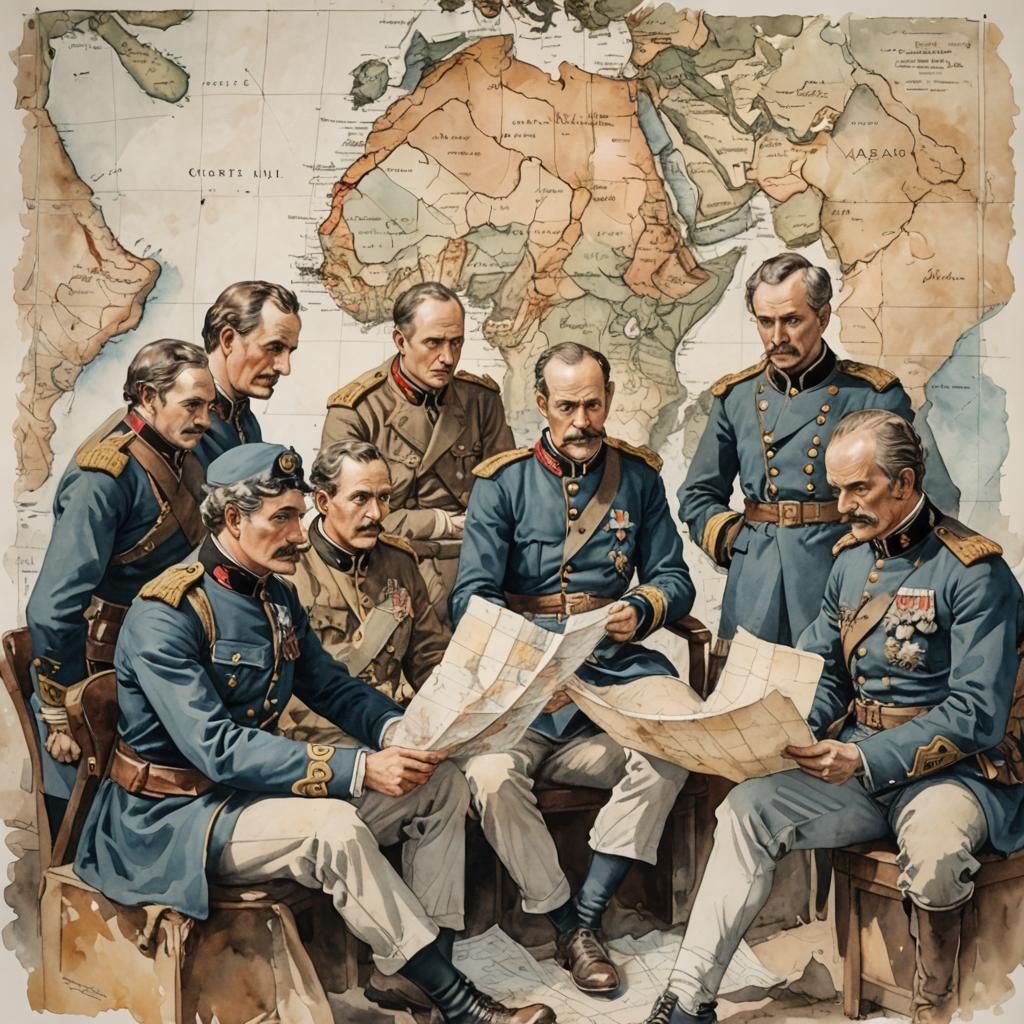
The Berlin Conference
Created 2 years ago · 3 comments· 0 likes
Dreamshaper XL Lightning
The conference, held in Berlin between November 15, 1884, and February 26, 1885, attempted to minimize the clashes between European countries over African territories, such as between France and England over Egypt or that of France and Italy over Tunisia.
The catalyst was the Congo problem initiated by Leopold II of Belgium, who tried to monopolize the exploitation of the Congo River resources, although Portugal and the United Kingdom also had territories in that basin. This motivated European countries to be summoned to regulate occupations. The fundamental purpose was to establish freedom of navigation and trade while forcing an effective occupation of the territory by the European country.
Twelve European nations, the Ottoman Empire, and the US were invited to the conference; many had no colonial interests on the continent but served as international validators of the agreements. Clearly, no one invited representatives of African nations.
3 Comments
Join the conversation


Annascarlson @annascarlson
Thank you for joining the fashion challenge.
2024-05-27T19:55:39.267ZReply

Great theme and setting... and thanks for the history lesson 😃
Creation Settings
- Text Prompts
The_Historian has hidden the prompt
- Model
- Initial Resolution
Medium
- Aspect Ratio
1:1
- Runtime
Short